KCCNY Sets Korean Buddhist Ritual Performances
Kyungtz’e Eosan Sooryukje comes to the Korean Cultural Center New York on November 13 and 14, 2026, with free admission.
by Body & Soul Newsroom ·
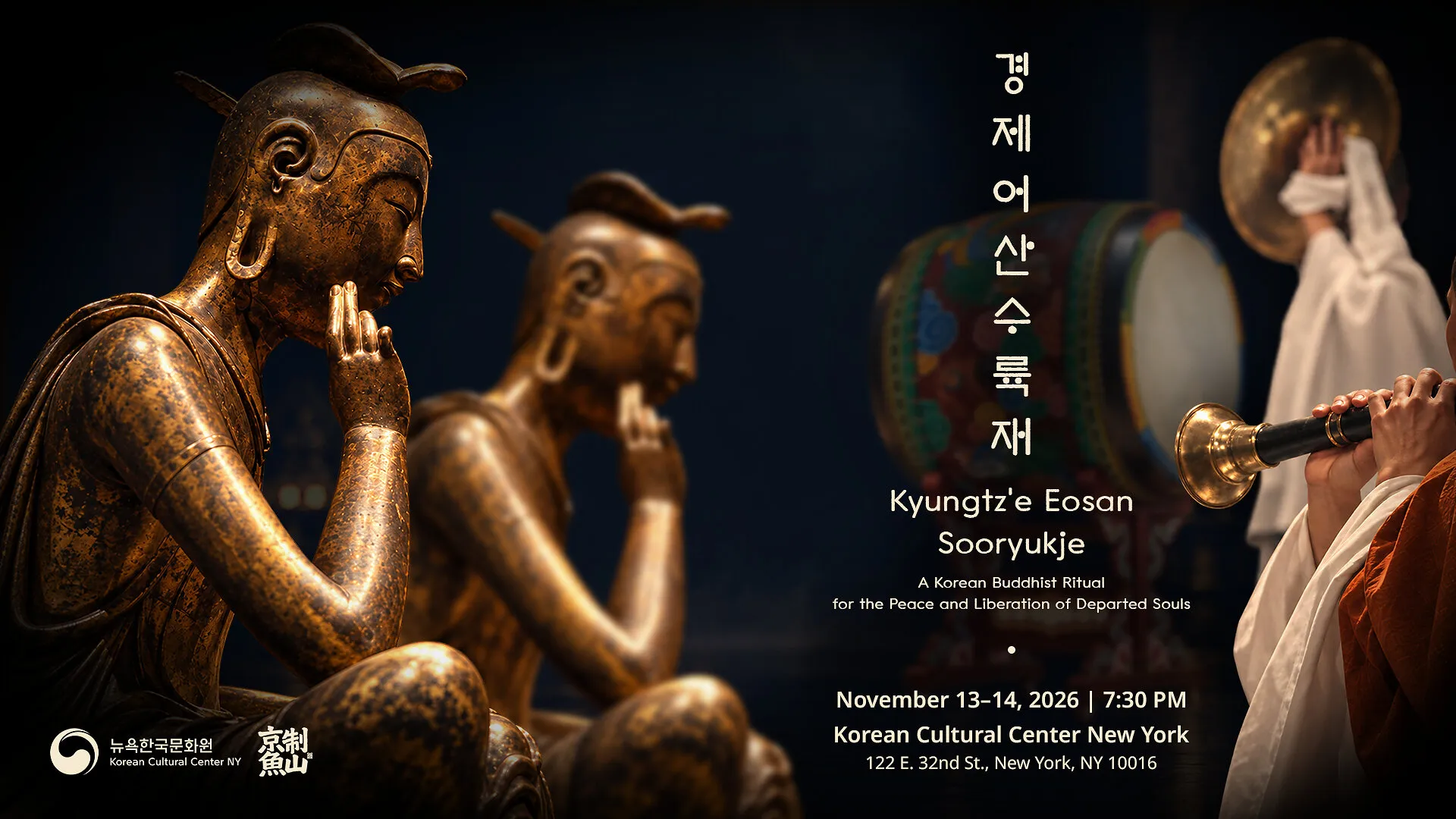
The Korean Cultural Center New York will co-present Kyungtz’e Eosan Sooryukje: A Korean Buddhist Ritual for the Peace and Liberation of Departed Souls with the Kyungtz’e Eosan Preservation Society on November 13 and 14, 2026. The free performances begin at 7:30 p.m. at the KCCNY Theater in New York, with pre-registration required. Led by Venerable Dongju Wonmyung and his disciples, the program presents Buddhist chanting, percussion, ritual dance, and offerings from a tradition of temples in Seoul and Gyeonggi Province. It is scheduled during the week of Veterans Day.
A Seoul Ritual Tradition
Kyungtz’e Eosan is a Buddhist chanting and ritual music tradition designated as Seoul Metropolitan Intangible Cultural Heritage No. 43. It includes beompae, the chanting of Buddhist ritual texts, and is passed from teachers to disciples through instruction and ceremonial practice.
The presentation will include butterfly dance and cymbal dance. A program book in Korean and English will guide audiences through the ceremony’s sequence and meaning.
Prayers For Departed Souls
Sooryukje is a Buddhist rite in which offerings are extended to all beings, including the departed and wandering spirits. The program includes Chugwon, a ritual offering prayers for the departed to be reborn in the Pure Land, a realm of peace in Buddhist belief, as well as prayers for the health, happiness, and longevity of the living.
The ceremony will remember those who died serving in the Korean War, victims of the September 11 attacks, and people lost in conflicts, natural disasters, accidents, and other tragedies worldwide. It also honors people who died while protecting and helping others.
Remembrance And Compassion
Jeong Mi Lee, Executive Director at KCCNY, said:
“Through this performance, we hope to introduce Korea’s Buddhist cultural heritage and bring audiences from different cultural backgrounds together in remembrance and compassion,”
“We invite audiences to listen to the sounds and observe the movements of the ritual, reflect on life and loss, and take a moment to look within.”