Start Here
Chakras are centers of subtle energy in the body, as described in certain forms of Hinduism and Tantric Buddhism. Many yoga systems name seven main chakras, running along the spine from its base to the crown of the head, each with its own name, place, symbol and qualities.
What a chakra is
The word chakra means “wheel,” and Yoga International notes it is also translated as “circle.” Encyclopaedia Britannica describes chakras as centers of psychic energy that are conceived of as meeting points between psychic forces and the functions of the body. In yogic philosophy, Yoga International explains, a chakra is a place where subtle energy channels called nadis come together.
Tradition counts far more than seven. Britannica records a supposed 88,000 chakras in the human body, of which six major ones lie roughly along the spinal cord and a seventh sits just above the crown of the skull. In the Hindu system each of the seven major chakras is linked with a particular color, shape, sense organ, natural element, deity and mantra, a one-syllable prayer formula. In Buddhism, Britannica adds, the count of major chakras is four rather than seven.
Where the idea comes from
Britannica places the chakra system within the esoteric teachings about the body found in certain forms of Hinduism and Tantric Buddhism. The two most important chakras in those teachings are the lowest, muladhara, at the base of the spine, and the highest, sahasrara, at the top of the head. Coiled at the muladhara, according to this teaching, is a divine power called kundalini. Through yogic techniques the practitioner tries to raise kundalini from one chakra to the next until it reaches the sahasrara, described as the realm of self-illumination.
The same word turns up elsewhere in Indian religion and culture. The Sudarshana Chakra is the whirling, wheel-shaped discus carried by the Hindu god Vishnu, and a wheel appears on the flag of India. The bindi, the dot worn on the forehead between the eyebrows by many Hindu, Jain, Sikh and Buddhist women and occasionally men, commonly marks the place of the sixth chakra.
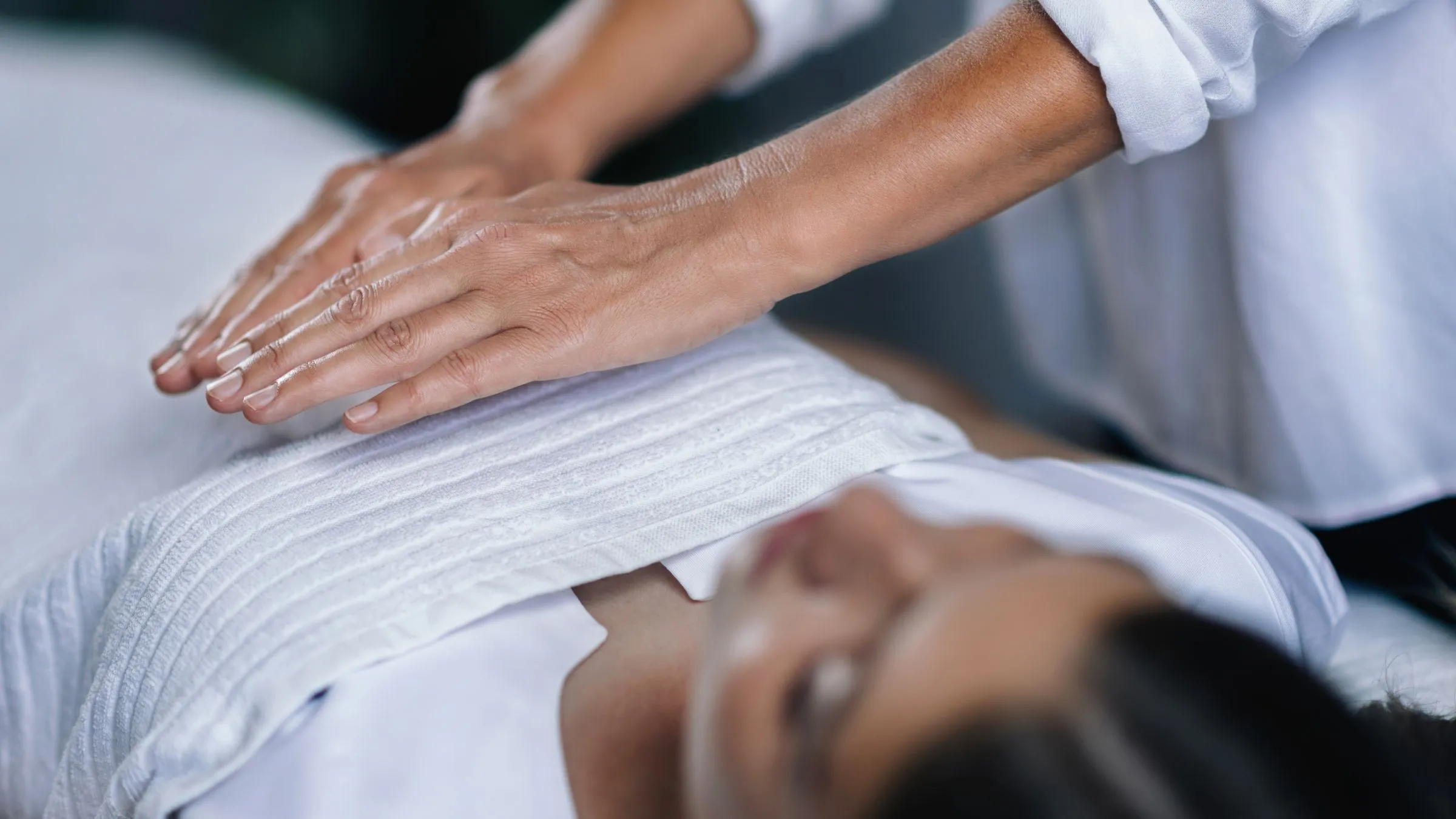
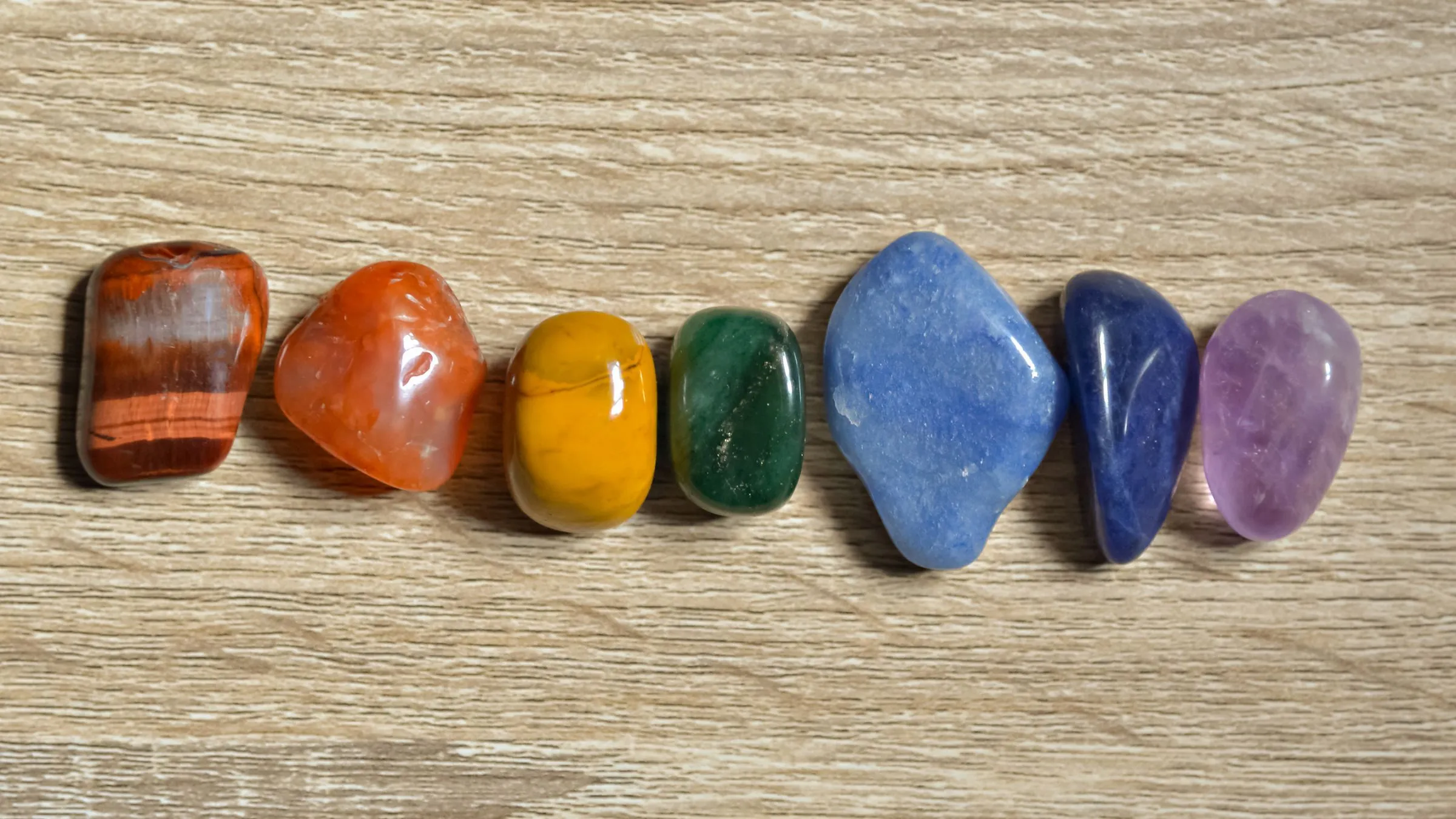
Today the chakras are a familiar part of modern yoga. Yoga International notes that many yoga teachers build classes around them, and the idea has also been taken up in other practices. In Reiki teaching, life force is said to flow through pathways called chakras, meridians and nadis, and in modern crystal practice the colors red through violet are matched to seven chakra points.
The seven chakras
Yoga International describes the seven main chakras, as many yoga systems teach them, in these terms.
- Muladhara, the root chakra. The name means “root support.” It sits at the base of the spine and is often shown as a red lotus with four petals, linked with the element of earth. In yogic teaching it governs four primal urges, for food, sleep, sex and self-preservation, and is associated with feeling grounded and stable.
- Svadhisthana, the sacral chakra. The name means “her own abode.” It sits at the pelvis and is often shown as an orange lotus with six petals, linked with water. Yogic teaching associates it with fluidity, creativity, emotion and desire.
- Manipura, the navel chakra. The name means “city of jewels.” It sits at the navel and is commonly shown as a red triangle, linked with fire. Yogic teaching associates it with inner fire, called agni, and with personal power and determination.
- Anahata, the heart chakra. The name means “unstruck.” It sits at the heart and is usually shown as a green six-pointed star inside twelve lotus petals, linked with air. Yogic teaching associates it with peace, love and openness, and calls it the home of the indestructible self.
- Vishuddha, the throat chakra. The name means “to purify.” It sits near the base of the throat and is often shown as a blue triangle inside a lotus of sixteen purple petals. In yogic teaching it is linked with ether, or space (akasha), and with speaking one’s truth and authentic self-expression.
- Ajna, the third-eye chakra. The name means “command center.” It sits between the eyebrows and is shown as a transparent lotus with two white petals. It has no element, since it is considered beyond the physical elements, and yogic teaching holds it to be the seat of the mind and the center of intuition and imagination.
- Sahasrara, the crown chakra. The name means “thousand-petaled lotus.” It sits just above the crown of the head and is often shown as a thousand-petaled lotus with a pinkish glow. It too has no element. Yogic teaching calls it the doorway into pure consciousness and links it with a sense of connection to the divine.
How chakras are worked with in yoga
Chakra practice in yoga usually pairs each center with postures, breathing exercises, sound and meditation. Yoga International suggests, for example, poses that strengthen the legs, feet and pelvic floor for muladhara; hip openers and forward folds for svadhisthana; core work and twists for manipura; chest stretches, backbends and devotional arts such as kirtan for anahata; lion pose, shoulderstand and ujjayi breathing for vishuddha; meditation and the breathing practice nadi shodhana for ajna; and meditation for sahasrara.
A simple way to explore this is a short sequence that moves up the body:
- Begin seated or standing, with attention at the base of the spine, and hold a pose that works the legs and feet.
- Move into a hip-opening pose, then a gentle twist, bringing attention to the pelvis and then the navel.
- Open the chest with a mild backbend or chest stretch.
- Sit and practice ujjayi breathing for a few minutes, with attention at the throat.
- Finish with nadi shodhana breathing and a few minutes of quiet meditation, with attention between the eyebrows and then at the crown.
Yoga International also gives a short affirmation for each chakra. For the root chakra it offers “I am connected to the earth. I am strong and I am stable,” and for the throat chakra, “I speak my truth. I live my truth.”
What science says
Britannica refers to the “supposed” 88,000 chakras of the tradition, and Live Science reports that the chakra philosophy of disease and energy imbalances, as used in crystal practice, is largely dismissed by practitioners of Western medicine. Chakra practice is not medical advice.
Frequently asked questions
How many chakras are there? Tradition speaks of many thousands, with seven major ones in the Hindu and yoga systems and four in Buddhism.
Are the chakra colors traditional? The traditional images give each chakra a lotus, a shape and colors, such as the red four-petaled lotus of muladhara and the green star of anahata. The simple rainbow sequence, with the colors red through violet running up the body, is how chakras are often matched in modern crystal practice.
What is kundalini? In the Tantric and yogic teaching Britannica describes, kundalini is a divine power coiled at the base of the spine. Practitioners use yogic techniques to raise it through the chakras to the crown.
Do I need to be Hindu or Buddhist to learn about the chakras? Yoga International notes that the chakras are becoming more and more mainstream, and that many yoga teachers theme their classes around them.
Next steps
Learn the seven names and their places first, starting at the base of the spine and moving up. Then try a yoga class themed around one chakra, or follow the short sequence above. Readers drawn to the energy-body idea may also want to read about Reiki and about the traditional meanings given to crystals, both of which borrow from the chakra system.