Meditation Apps: How They Differ and How to Choose One
Meditation apps range from free libraries of thousands of recordings to structured courses led by a single teacher, and the choice depends on how you like to be guided.
Updated
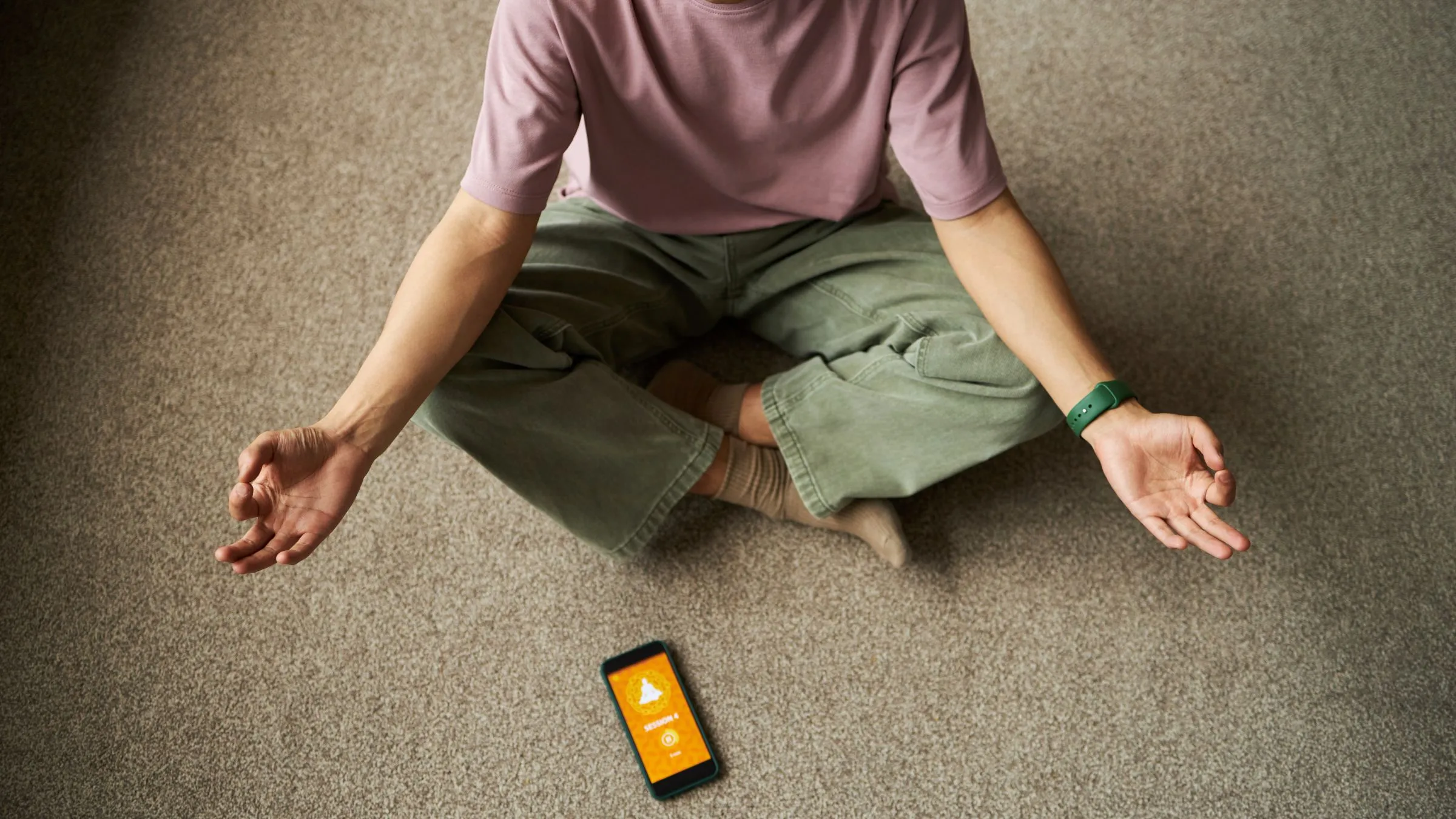
A meditation app puts guided practice in your pocket. Most offer recorded meditations led by a teacher’s voice, a timer for silent sitting, and courses that build a practice over days or weeks, and they differ mainly in who does the teaching, how the content is organized and whether it is free.
What a meditation app does
The basic unit in almost every app is the guided meditation: a recording in which a teacher talks you through settling your posture, finding the breath and returning to it when the mind wanders. Around that core, apps add different things. Some are built around one teacher and a structured course. Others are open libraries with thousands of recordings from many teachers. Many include a timer with bells for unguided sitting, sleep content, short practices for the middle of a busy day, and reminders or progress stats.
What to look for
Guidance style. Decide whether you want one voice and one path, or a wide choice of teachers and styles. A single structured course suits people who want to be told what to do next; a large library suits people who like to explore.
Tradition and tone. Some apps draw openly on a Buddhist lineage, some present meditation in secular, psychological language, and some mix the two. Read the app’s own description of its teachers and approach.
Session length. Look for sessions short enough to fit your day. Some apps let you choose sessions by length, from a few minutes up.
Silent timer. If you already know the basics, a timer with bells may matter more than guided content.
Free tier. Apps range from entirely free to subscription-only after a trial. Check what remains available without paying.
Offline use and platforms. Check that the app runs on your phone, tablet or watch, and whether sessions can be downloaded for use without a connection.
Family use. If children will use it, look for content made for their age.
The apps
Headspace
Headspace, from Headspace Inc., offers a library of guided meditations that runs from quick three-minute resets to longer sessions, along with courses and programs. For the evening it adds guided sleep meditations, sleep sounds and “sleepcasts.” Beyond meditation, the app gives access to licensed therapists, mental health coaches and an AI companion called Ebb. It runs on iPhone, iPad and Apple Watch, and on Android phones and tablets. Free tier: no ongoing free plan is described by the maker; Headspace offers a free trial, after which it is a paid subscription.
Insight Timer
Insight Timer, from Insight Network Inc, is built as an open library. Its free features include thousands of guided meditations from many teachers, among them Tara Brach and Jack Kornfield, along with music tracks and ambient sounds. You can choose sessions by length, follow particular teachers, join discussion groups and use the app’s meditation timer for silent sitting. Stats and milestones track your practice, and the app also lists more than 1,000 courses. It runs on iPhone, iPad, Apple Watch and Android. Free tier: yes; its app store listing describes one optional in-app subscription on top of the free library.
Waking Up
Waking Up, from Waking Up Course, LLC, is shaped around the teacher Sam Harris. New users start with a 28-day Introductory Course, then move on to regular guided sessions with Harris, a meditation timer for building your own sessions, and a large library of theory sessions, life courses, conversations and question-and-answer recordings. Techniques covered include mindfulness in the Vipassana style, loving-kindness and body scans. It runs on iPhone, iPad, Apple Watch and Android. Free tier: no standing free plan; the app is an annual subscription after a free trial, and the maker says it gives a free membership to anyone who can’t afford one.
Medito
Medito is made by the Medito Foundation, a non-profit that builds open-source meditation tools. The app offers guided meditations, mindfulness courses, breathing exercises and sleep stories. You pick a mood or goal, choose a length between 3 and 30 minutes and press play, and sessions can be downloaded for offline practice. It runs on iOS and Android. Free tier: yes, and everything is free; the foundation states there are no trials and no premium tier.
Healthy Minds Program
The Healthy Minds Program is published by Healthy Minds Innovations, now called Humin, and its store listing ties it to the neuroscientist Richard Davidson and the Center for Healthy Minds at the University of Wisconsin-Madison. It pairs guided meditations with podcast-style lessons, organized around four themes: awareness, connection, insight and purpose. It also offers “active” practices you can do while moving through your day, such as while folding laundry, alongside seated ones. It runs on iPhone, iPad and Android. Free tier: yes; its app store listing says the program is available by donation rather than by subscription.
Plum Village
The Plum Village app comes from the community of the Zen teacher Thich Nhat Hanh and is published by the Centre for Applied Ethics. It is organized into four sections: meditations, talks, resources and bells of mindfulness. It holds more than 100 guided meditations, more than 300 video talks and question-and-answer sessions with Thich Nhat Hanh and Plum Village teachers, 15 guided meditations for children, a customizable timer and a “mindfulness bell” that sounds during the day as a reminder to pause. Talks and meditations can be downloaded for offline use. It runs on iPhone, iPad and Android. Free tier: yes; its store listing describes the app as free forever, with no ads or in-app purchases and all content free.
Smiling Mind
Smiling Mind, from the organization of the same name, presents meditation as part of what it calls mental fitness, using a model designed by psychologists and mental health experts. The app holds more than 700 lessons, practices and meditations, with collections for children aged 5 to 12 as well as adults, programs for families, and meditations in the Indigenous Australian languages Kriol, Ngaanyatjarra and Pitjantjatjara. Content can be downloaded for offline use. It runs on iPhone, iPad and Android. Free tier: yes; the maker describes it as a free app.
Frequently asked questions
Do I need to pay for a meditation app? No. Medito and Plum Village are entirely free, the Healthy Minds Program runs on donations, and Insight Timer and Smiling Mind offer large free libraries. Subscription apps such as Headspace and Waking Up offer free trials.
Which app suits someone who wants a Buddhist approach? Plum Village draws directly on the teaching of the Zen teacher Thich Nhat Hanh, and Insight Timer carries teachers such as Tara Brach and Jack Kornfield, founders of insight meditation communities. Waking Up teaches Vipassana-style mindfulness alongside its own theory sessions.
Is an app as good as a class? An app gives you guidance whenever you want it; a class or group gives you a teacher who can answer questions and people to sit with.
Can a meditation app replace therapy? No. Meditation is not a substitute for medical or psychological care, and the US National Center for Complementary and Integrative Health advises against using it to put off seeing a health care provider about a problem.