Start Here
Meditation is the practice of resting your attention on one thing, most often the breath, and gently bringing it back each time the mind wanders off. The most common form for beginners is breath meditation, also called mindfulness meditation, and it needs nothing more than a place to sit and a few minutes.
What meditation is
The word covers a family of practices. The National Center for Complementary and Integrative Health (NCCIH) describes some forms that keep the mind focused on a single sensation, such as the breath, a sound, a visual image or a mantra, which is a word or phrase repeated over and over. Breath meditation is the simplest place to begin. You breathe in and out, notice when your mind has drifted into thoughts about work, relationships or the day ahead, and then return your attention to the breath. Lion’s Roar, the Buddhist magazine, describes this as training the mind to stay in the present moment.
Nothing about this requires a particular belief. Lion’s Roar puts it simply: you don’t have to be Buddhist to meditate.
Where meditation comes from
NCCIH notes that meditation has a history going back thousands of years and that many techniques began in Eastern traditions. Lion’s Roar describes the Buddha teaching meditation as an essential tool for anyone seeking freedom from suffering.
Structured programs also teach it. Mindfulness-based stress reduction combines meditation with discussion sessions, and mindfulness-based cognitive therapy pairs mindfulness with elements of cognitive behavioral therapy. According to the National Health Interview Survey, the share of US adults who meditated more than doubled between 2002 and 2022, from 7.5 to 17.3 percent, making it the most popular of the seven complementary approaches the 2022 survey asked about.
How to meditate: a basic breath practice
These steps follow the basic mindfulness instructions given by Lion’s Roar.
- Find a place and a time. Choose a quiet spot. When you are starting out, allow about five minutes.
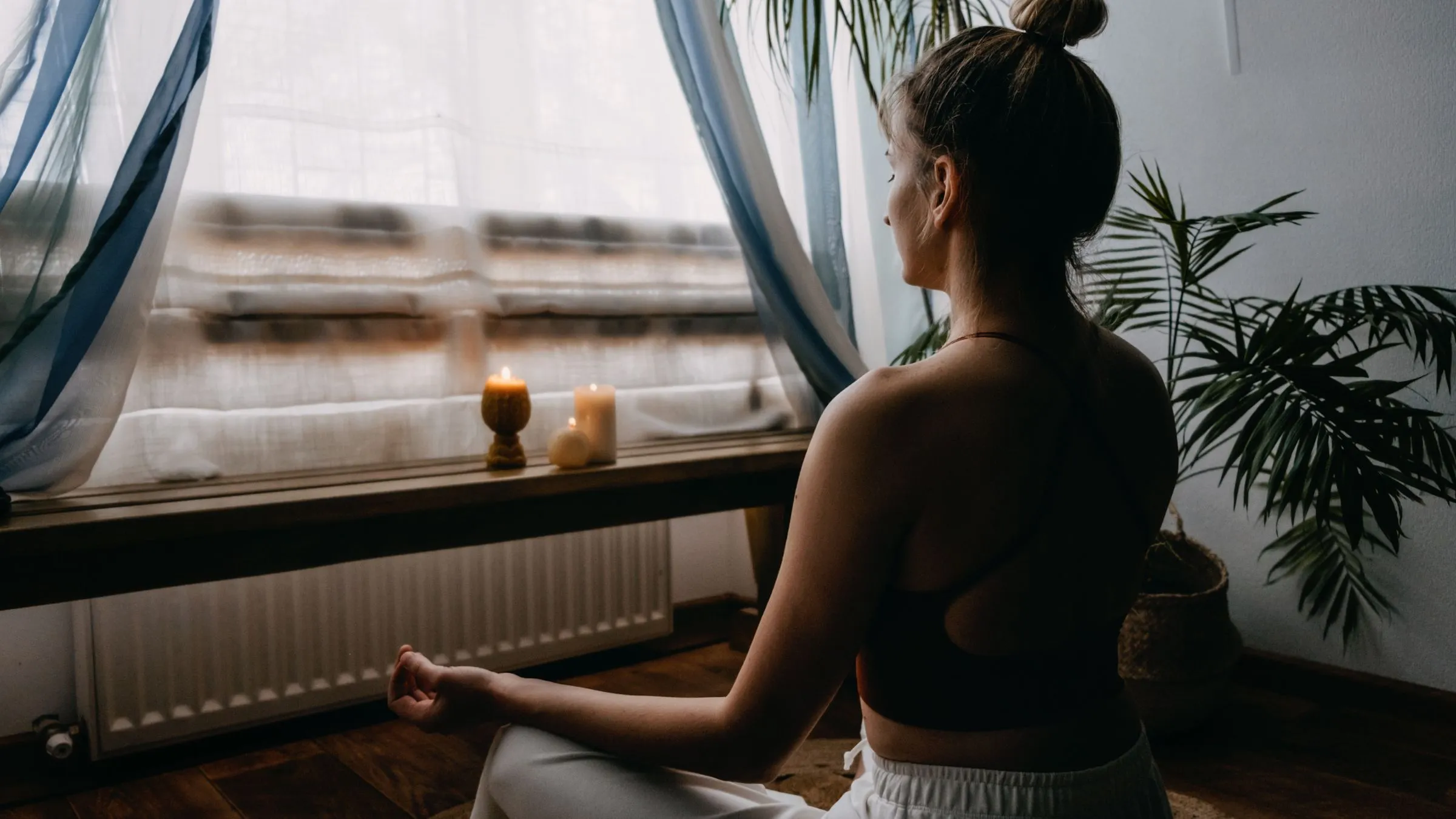
- Take your seat. Sit cross-legged on a cushion, or on a straight-backed chair with your feet flat on the floor. Try not to lean against the back of the chair.
- Settle your posture. Rest your hands palms-down on your thighs and sit upright with a straight back, relaxed but dignified. Keep your eyes open and let your gaze fall slightly downward, about six feet in front of you.
- Follow the breath. Place your attention lightly on the out-breath while staying aware of the room around you. At the end of each out-breath, simply rest until the next in-breath begins on its own. For a more focused session, follow both the in-breath and the out-breath.
- Note thoughts and come back. Whenever a thought, feeling or sound pulls your attention away, say “thinking” silently to yourself and return to the breath. There is no need to judge yourself when this happens.
- End the session. When the time is up, the formal practice is over. There is no need to drop whatever calm or openness you noticed; see whether it can stay with you as you move into the rest of your day.
Pema Chödrön, quoted by Lion’s Roar, describes the same move: when the mind has wandered off, acknowledge it as “thinking,” without harshness, and return to the out-breath. A wandering mind is not a failure. Lion’s Roar calls it perfectly natural, since the mind is built in part for thinking.
Other beginner practices
Body scan. Attention moves slowly through the body, from the feet up to the head, resting on each area and its sensations.
Walking meditation. You walk slowly in a peaceful place and follow your footsteps the way you would follow your breath. Lion’s Roar suggests a simple cue, “lifting, moving, placing,” to bring the mind back to the body, and a verse used by the Zen teacher Thich Nhat Hanh: “I have arrived” on the in-breath, “I am home” on the out-breath. It suggests starting with about ten minutes and working up toward half an hour.
Loving-kindness, or metta. You call to mind someone you love and silently offer them good wishes in traditional phrases such as “May you be safe and protected,” “May you be healthy and strong” and “May you be truly happy,” then widen those wishes to yourself and to others.
Tonglen. A practice whose name translates as “giving and taking.” Pema Chödrön describes it as a meditation in which the meditator imagines breathing in the pain of others and breathing out whatever will benefit them.
Making it a habit
Lion’s Roar offers practical advice for keeping going. Practice the same way each time, and in the same place if you can. Give yourself a cue, such as a phone reminder, or light a candle or incense before you sit. Make a promise you can keep: a very doable five minutes is enough at first. Sitting with other people, in person or with a meditation friend over a video call, can make it easier to show up.
You don’t need special equipment. A meditation cushion, called a zafu, or a meditation bench is useful, but a chair works too. If you sit in a chair, keep your spine straight, your feet flat on the ground and your hips higher than your knees.
What research has looked at
Studies have looked at whether meditation and mindfulness help people manage anxiety, stress, depression and pain, and at their effects on sleep quality and on withdrawal from nicotine, alcohol and opioids. NCCIH cautions that much of this research has been preliminary or not scientifically rigorous, and that results may have been read too optimistically. Meditation is usually considered low-risk, but few studies have looked closely at harmful effects; a 2020 review of 83 studies found that about 8 percent of participants had a negative experience, most often anxiety or depression.
Meditation is not medical advice and not a replacement for care. NCCIH advises against using it to put off seeing a health care provider about a medical problem, and Lion’s Roar says plainly that meditation is not a replacement for therapy or medication.
Frequently asked questions
Should my eyes be open or closed? Either works. Lion’s Roar suggests a soft gaze slightly downward, about six feet ahead, neither too tight nor too loose.
What do I do with my hands? Two hand positions are common in Buddhist meditation. In “resting the mind,” the palms rest face down on the knees or thighs. In the “cosmic mudra,” often used in Zen, the right hand rests palm up in the lap with the left hand on top, thumbs lightly touching to form an oval below the navel.
What if I can’t find a quiet place? Sit with the noise. Traffic, a neighbor’s television and other sounds can simply become part of what you notice.
Is it supposed to hurt? No. Lion’s Roar says meditation is not always comfortable but shouldn’t be painful. Try different cushions, a bench or a chair until you find a posture that suits your body.
Next steps
Pick a time tomorrow and sit for five minutes using the steps above. Practice the same way each time, and in the same place if you can, as Lion’s Roar suggests. If you would like guidance, look for a local meditation group or a teacher, and ask about their training and experience, as NCCIH suggests. Once the breath practice feels familiar, try ten minutes of walking meditation or a short loving-kindness session.