Cultivating the Soul: A Journey of Earth Healing at Sedona Mago
Lead retreat trainer Dahari Kronenberg on a first stay at Sedona Mago, a tapping practice to try at home, and caring for the land.
by Sedona Mago Retreat & Wellness ·
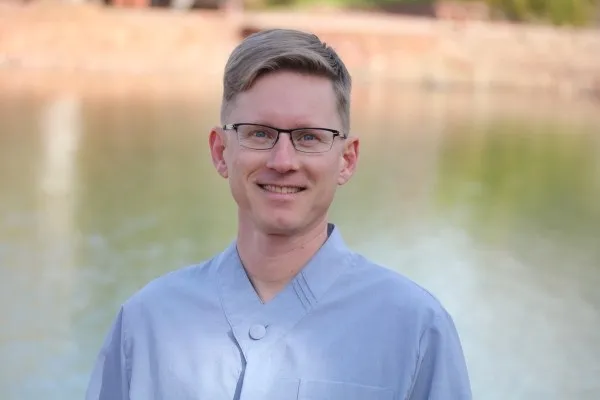
1. Please introduce yourself to our readers and tell us a bit about your role and your work at Sedona Mago Retreat.
Hi, I’m Dahari (Travis) Kronenberg. I came to Sedona Mago almost four years ago, looking for a place where I could continue teaching Tao practices while also developing online wellness education.
These days, I help lead our retreat programs and work on Mago On Demand, our online learning platform. I also spend a good amount of time working with the land through regenerative agriculture and composting.
Mago means Mother Earth, and that connection to nature is an important part of what we do here. Working with the land has become a meaningful part of my own experience at Sedona Mago. I hope our guests can feel that connection too, whether it’s through the food we grow, the natural surroundings, or simply spending some quiet time outdoors.
2. What does a first-time guest experience during a retreat at Sedona Mago?
The first time can feel like a real journey, as we are a 2-hour drive from the Phoenix airport, and the last 11 miles are on a dirt road taking you deep into nature. We have a beautiful view of Secret Mountain — a long red mesa that closes off the horizon — with Black Mountain and Casner Mountain rising darker and rounder on the other side of us. Just being here feels serene, and if you've come from a busy city, it can feel like another world.
You arrive the first day to your clean and simple room with beds and no TV. We hope your stay feels meditative and connected — connected to the land, not a screen — so we leave the rooms free of distractions. Cell service out here is weak to non-existent, which many guests find becomes its own kind of fast. Free Wi-Fi is available in our main buildings and lounge area for important work and outside communication.
Enjoy your first meal at our dining hall with some delicious pescatarian food options. Your first evening session includes some orientation and a taste of our Tao training (tapping, qigong, stretching, energy meditation, etc.) before heading to bed after a day of travel. Before sleeping, you can enjoy the dazzling sky full of stars thanks to the lack of city light pollution.
You wake to desert quiet — and if you're up early enough, to sunrise spilling over the red rocks. No two of our retreats look quite the same, so there's no single first-time experience — but whichever one brings you here, you can expect to start your day after breakfast, around 8:30 or 9 a.m. Throughout the day you will have a mixture of training, lecture, meditation, and nature experiences in between your three healthy meals. Most retreats have an evening session to finish off your full day.
Since most retreats have a full schedule, many guests enjoy booking an extra day to spend more time freely on the beautiful 220+ acres.
3. Which simple mindfulness or energy practice would you suggest someone tries at home?
Tapping is one of the easiest, quickest, and most effective methods of training. It creates clear communication between your body and mind. Tapping lets you know your true body condition, what parts are tight or need some extra love. It’s very refreshing physically, but also can help you release stored thoughts and emotions that may be affecting you negatively. After a thorough tapping session, your body and mind are more relaxed and ready for deeper meditation practice if you choose.
You can follow a tapping flow (usually following the meridian channels), or just freely tap and follow your feeling. You can start with the head and face, then move onto the arms, upper and lower torso, and then finish with the legs. I would devote 5-10 minutes to start. Palm, fist, fingertips — there are many ways to tap. It depends on the body part and its condition, so it is adjustable. However, you should tap hard enough that your mind isn’t wandering off. Instead of trying to focus on each body part with your mind, you are creating enough stimulation that your mind automatically goes to where you are tapping. After you stop tapping, the most important thing is to just feel and breathe. The mind likes to race off to the next thing, so take that moment to just feel your body and the changes you created.
4. How does being among Sedona’s red rocks shape the way you teach?
It’s not something I consciously plan around, but the land brings its own energy to the table and amplifies whatever we’re practicing. When I first started training here, my body released old energy faster than it ever had. Where I do use it deliberately is in a handful of red rock spots where you can just lie down and be embraced by the earth. When it’s warm out, bring a towel and lie back on a huge red rock for a rock sauna. Or walk the 120 Steps meditation, where each step represents a year of your life — a powerful life review on its own.
Just being there is healing.
5. What do people most often say has changed for them after a retreat?
It’s common for me to hear people say “life-changing” after a retreat. I’ve had multiple guests report being able to sleep through the night for the first time in years. Aches and pains gone. Guests tell me their body and nervous system finally feel relaxed, that they’ve let go of old emotional pain, and that they leave feeling brighter and full of hope.
6. What exciting plans and goals do you have for Sedona Mago over the next few years?
One thing I’m looking forward to is continuing to develop Mago On Demand. I’d like to make more Tao practices available online so people can keep practicing at home, even after their retreat.
We’re also working on several projects across our 220-acre property. We’re gradually developing food forests, restoring native plants and habitats, and finding better ways to collect rainwater. There’s a lot we’d like to do, and these things take time, but it’s rewarding to see the land slowly change.
We’re also looking at creating more meditation spaces throughout the property, giving guests different places to spend quiet time in nature. And as we look toward the future, there are plans to expand our accommodations so we can welcome more guests.
For me, it’s really about continuing to care for the land while creating more opportunities for people to experience what Sedona Mago has to offer.
About Dahari Kronenberg
Dahari is a Tao practitioner and holistic fitness instructor with more than 15 years of teaching experience. Certified in Yoga Therapy and holding a black belt in the healing martial art of Dahnmudo, he blends physical and spiritual disciplines in his teaching. His kind and comedic nature makes every student feel welcome. At Sedona Mago Retreat, he helps lead education programming, builds the Mago On Demand online school, and tends the land through regenerative agriculture.
Dahari Kronenberg on LinkedIn · Sedona Mago Retreat & Wellness